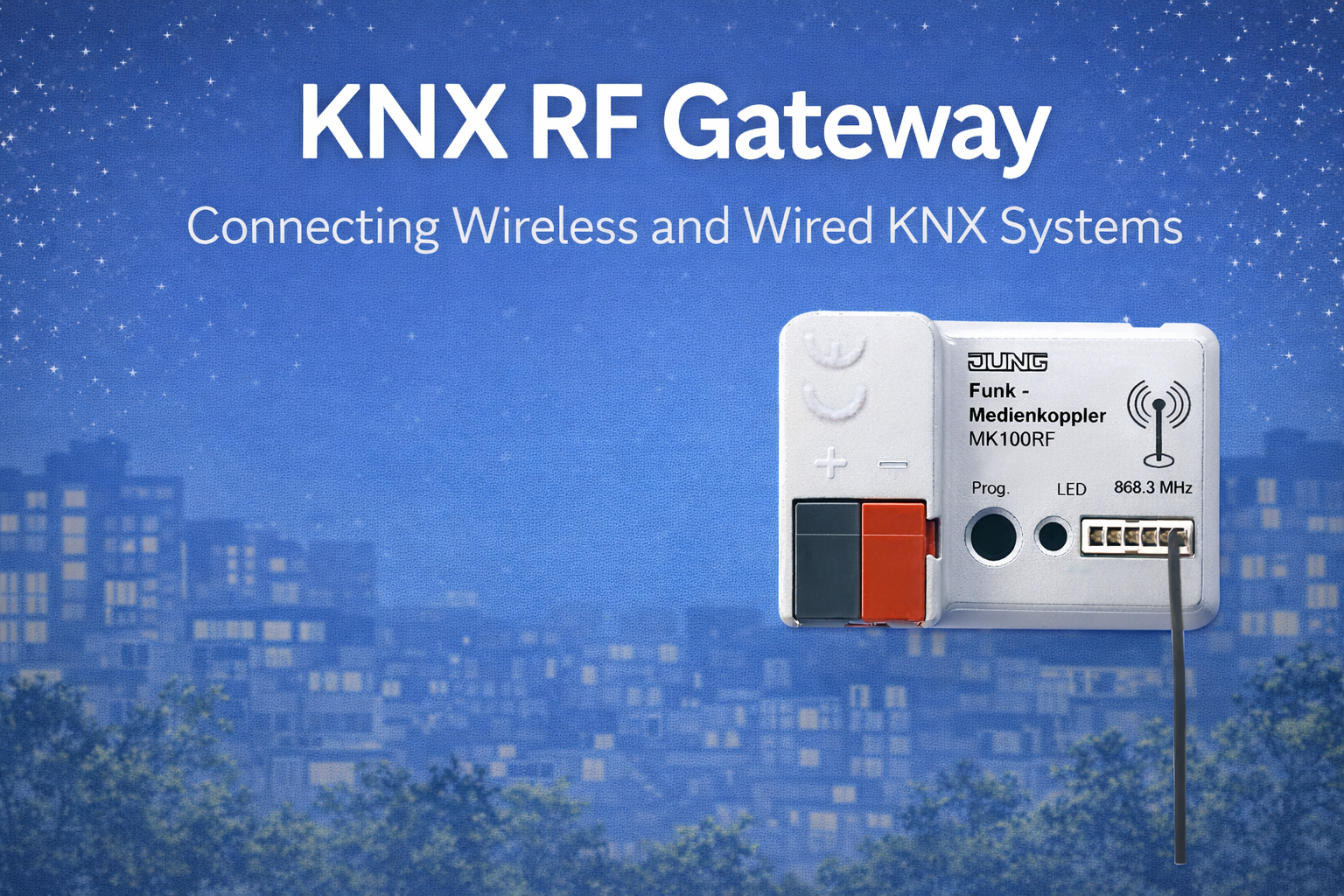
Introduction
Wireless automation is no longer limited to a single technology. Today, system integrators regularly encounter KNX RF, Zigbee, and Z-Wave—often in the same market, sometimes even in the same building. While these technologies may appear similar on the surface, they are designed for very different purposes.
This article provides a technical, integrator-focused comparison of KNX RF, Zigbee, and Z-Wave. The goal is not to declare a “winner,” but to explain where each technology fits, where it fails, and why KNX RF behaves fundamentally differently from consumer wireless protocols.
1. Why This Comparison Matters for Integrators
Clients increasingly ask questions like:
- “Why not use Zigbee instead of KNX RF?”
- “Is Z-Wave more reliable?”
- “Can wireless really replace wired automation?”
Without a clear technical explanation, these discussions often turn into price comparisons, which is the wrong metric. The real differences lie in:
- System architecture
- Reliability model
- Security philosophy
- Lifecycle and maintainability
Understanding these differences allows integrators to justify design decisions professionally, not emotionally.
2. Design Philosophy: Professional vs Consumer Automation
The biggest difference between KNX RF and Zigbee/Z-Wave is design intent.
KNX RF
- Designed for professional building automation
- Part of a multi-medium KNX system (TP, IP, RF)
- Works without cloud or internet
- Focused on long-term stability (15–25 years)
Zigbee & Z-Wave
- Designed primarily for consumer and residential smart homes
- Often cloud-connected
- Optimised for quick setup and low cost
- Shorter product lifecycle
This philosophical difference influences everything else.
3. Network Architecture Comparison
KNX RF – Star / Gateway-Based
- RF devices communicate with gateways
- Gateways bridge RF to TP or IP
- Predictable communication paths
- No routing dependency between RF devices
Zigbee – Mesh Network
- Devices relay messages for each other
- Network health depends on powered nodes
- Topology changes dynamically
- Troubleshooting can be complex
Z-Wave – Mesh Network
- Similar mesh concept to Zigbee
- Limited hop count
- Performance depends heavily on node placement
Integrator insight:
Mesh networks can be flexible, but they are harder to debug in large or changing environments.
4. Reliability & Determinism
KNX RF
- Event-based, low-traffic communication
- Gateway-controlled transmission
- Predictable response time
- Designed to coexist with wired KNX
Zigbee
- Traffic depends on mesh health
- Latency varies with routing path
- Performance can degrade when devices fail
Z-Wave
- More controlled than Zigbee
- Still dependent on mesh stability
- Limited bandwidth per network
For lighting, shading, and HVAC control, predictability matters more than flexibility—this is where KNX RF stands out.
5. Frequency Bands & Interference
| Technology | Frequency Band |
|---|---|
| KNX RF | 868 MHz |
| Zigbee | 2.4 GHz |
| Z-Wave | Sub-GHz (region-specific) |
Practical Impact
- 868 MHz offers better wall penetration
- 2.4 GHz competes with Wi-Fi and Bluetooth
- Sub-GHz bands vary by region and regulation
KNX RF’s frequency choice is standardised by the KNX Association, ensuring consistency across manufacturers.
6. Security Model Comparison
KNX RF Secure
- AES-128 encryption
- Authentication and replay protection
- Commissioned locally via ETS
- No cloud dependency
Zigbee
- Encryption supported
- Security depends on implementation
- Often managed via hubs or cloud services
Z-Wave
- Strong security in newer versions
- Central controller dependent
- Device inclusion security varies
Integrator rule:
KNX Secure is part of the standard, not an optional ecosystem feature.
7. Commissioning & Maintenance
KNX RF
- Commissioned via ETS
- Requires planning and structure
- Changes documented in project file
- Suitable for long-term maintenance contracts
Zigbee / Z-Wave
- App-based commissioning
- Easy initial setup
- Limited documentation consistency
- Vendor ecosystem dependency
What is easy to install is not always easy to maintain for 10+ years.
8. Device Ecosystem & Interoperability
KNX RF
- Certified interoperability
- Multi-vendor, standardised behaviour
- Backward compatibility focus
Zigbee
- Multiple profiles and variants
- Interoperability depends on ecosystem
- Vendor lock-in common
Z-Wave
- Better interoperability than Zigbee
- Smaller device ecosystem
- Region-specific limitations
KNX RF devices from different manufacturers behave consistently because they follow a single global standard.
9. Scalability & Project Size
Small Apartments
- Zigbee or Z-Wave can work
- KNX RF may be overkill unless part of hybrid system
Villas & Premium Homes
- KNX RF + TP ideal
- Zigbee struggles with complexity
Commercial Buildings
- KNX RF (selective use)
- Zigbee/Z-Wave not recommended
Key takeaway:
Zigbee and Z-Wave scale horizontally (more devices). KNX scales architecturally (lines, areas, gateways).
10. Lifecycle & Long-Term Viability
KNX RF
- Designed for decades
- Backward compatibility maintained
- Not dependent on app updates or cloud servers
Zigbee / Z-Wave
- Product lifecycles shorter
- Platforms change frequently
- Cloud shutdown risk exists
For professional automation, longevity is a technical requirement, not a bonus.
11. Cost: The Hidden Comparison
Initial device cost:
- Zigbee / Z-Wave cheaper
- KNX RF higher upfront cost
Lifecycle cost:
- KNX RF lower service calls
- Easier troubleshooting
- Better documentation and handover
Professional projects are evaluated over years, not weeks.
12. When Each Technology Makes Sense
Choose KNX RF When:
- Reliability is critical
- Project is hybrid TP/RF/IP
- Long-term maintenance is expected
- Commercial or premium residential
Choose Zigbee When:
- Budget is tight
- System is small
- Client accepts cloud dependency
Choose Z-Wave When:
- Residential, closed ecosystem
- Moderate scale
- Controller-centric design acceptable
Wireless Automation Comparison
| Feature / Aspect | KNX RF | Zigbee | Z-Wave |
|---|---|---|---|
| Designed for | Professional building automation | Consumer smart homes | Consumer smart homes |
| Typical projects | Villas, apartments, hotels, offices | Small homes, DIY setups | Homes, small installations |
| Works without internet | ✅ Yes | ⚠️ Sometimes | ⚠️ Sometimes |
| Cloud dependency | ❌ No | ⚠️ Often required | ⚠️ Often required |
| Reliability level | ⭐⭐⭐⭐⭐ Very high | ⭐⭐⭐ Medium | ⭐⭐⭐ Medium |
| Response consistency | Predictable & instant | Can vary | Can vary |
| Wireless frequency | 868 MHz (less interference) | 2.4 GHz (Wi-Fi band) | Sub-GHz (region-specific) |
| Wall penetration | Very good | Moderate | Good |
| Security standard | Built-in (KNX Secure) | Depends on brand | Depends on controller |
| Vendor lock-in | ❌ No (multi-brand) | ⚠️ Often yes | ⚠️ Moderate |
| System lifespan | 15–25+ years | 5–10 years | 5–10 years |
| Maintenance approach | Professional service model | App & cloud updates | Controller dependent |
| Scalability | Excellent (structured design) | Limited (mesh dependent) | Limited (mesh dependent) |
| Best suited for | Long-term, reliable automation | Budget-friendly smart homes | Closed residential systems |
| Initial cost | Higher | Lower | Lower |
| Long-term value | ⭐⭐⭐⭐⭐ Excellent | ⭐⭐ Limited | ⭐⭐ Limited |
Conclusion
KNX RF, Zigbee, and Z-Wave are not competitors—they are tools designed for different jobs. Zigbee and Z-Wave are well suited for consumer smart homes and quick deployments. KNX RF is designed for professional building automation, where reliability, security, and long-term maintainability matter more than speed of installation.
For system integrators, understanding these differences allows confident system design—and confident conversations with clients.